The short answer
What is a Georgian supra?
A supra is the Georgian feast led by a toastmaster. What it is, how old it is, and whether a Tbilisi dinner-and-dance night is a fair way to try one.
Book the Tbilisi dinner and dance night ↗Quick answer
A supra is the traditional Georgian feast, led by a toastmaster called the tamada who proposes each toast. The Tbilisi dinner-and-dance night is not one in the family sense: it is a hosted group dinner at shared tables in a restaurant, with a live folk-dance show, and no formal tamada comes with the ticket. It is a good way to meet the food, the wine and the dancing together, and a poor stand-in for a family table.
What a supra is
In Georgian, supra literally means tablecloth. The word was borrowed from Persian sofre and came to name the feast laid out on one. Wikipedia calls the supra a traditional Georgian feast and an important part of Georgian social culture, and Georgia's food writing ties it to the Georgian love of family and friends: a supra is offered spontaneously to relatives, friends or guests. It comes in two kinds, a festive supra, the keipi, and a sombre one, the kelekhi, which is always held after burials. The tradition was entered on Georgia's national intangible cultural heritage list in 2017. Large public meals in Georgia are not held without a supra, and when there are no tables the cloth is laid on the ground.
The tamada, the voice of the table
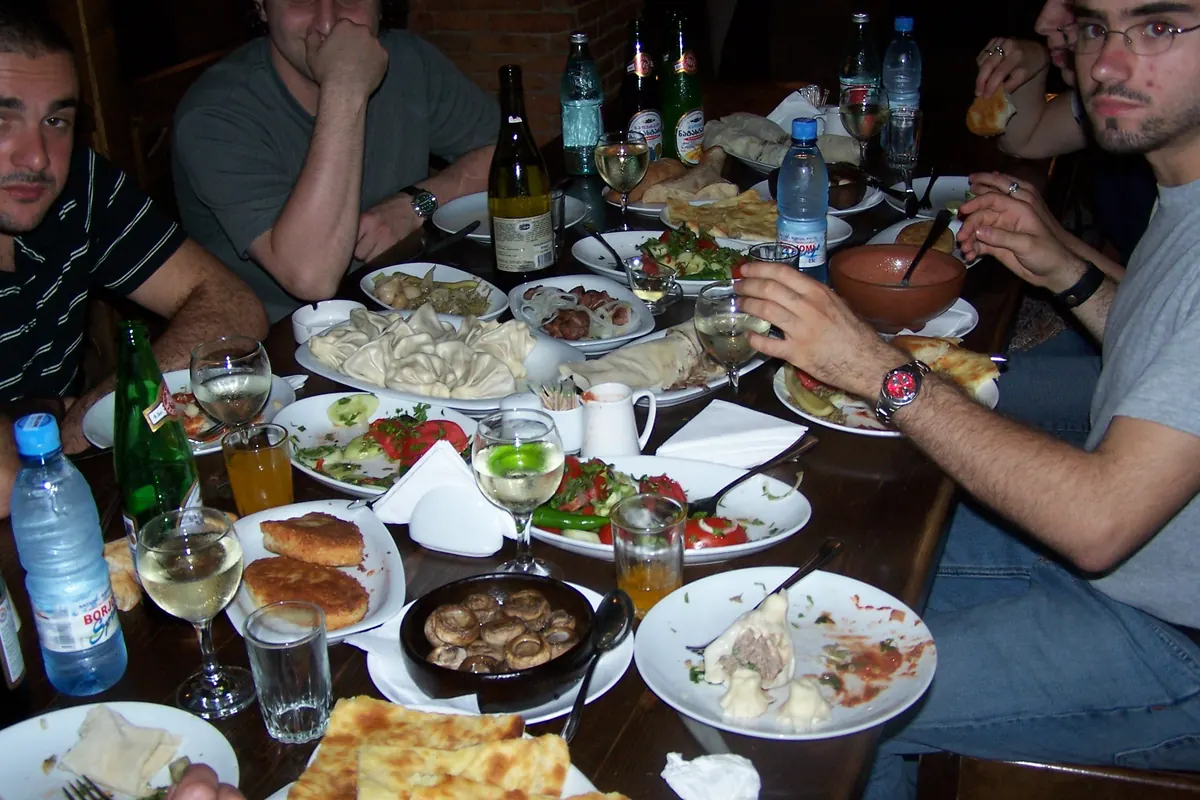
Every supra, whatever its size, is led by a tamada, the toastmaster who introduces each toast. At a small family meal the head of the household simply takes the role. At a wedding the family picks someone in advance, and at a mid-sized gathering the people at the table choose. A good tamada speaks clearly and cleverly, organises the singing and dancing between toasts, senses the mood of the table and draws quiet guests back in. Georgians like to say the tamada is the dictator of the table. The Wikipedia article on the role argues that leader, even teacher, is closer to how it works. In groups of friends who gather often, Wikipedia adds, the role is sometimes passed around.
How a toast works
A toast is called a sadghegrdzelo. The tamada proposes it and speaks about its theme at some length while the guests hold their glasses without drinking. Then the toast continues around the table, often counter-clockwise: the next guest who wants to speak raises a glass, says a few words and drinks. A guest who prefers not to speak can drink after words that resonate. Eating during toasts is fine; talking over the speaker is not. When everyone who wants to speak has done so, the tamada proposes a new toast and the cycle starts again. Popular themes include God, Georgia, family, saints, friends and ancestors, and the first toast usually goes to the tamada. Every guest is expected to toast the people around the table in turn.
How old is the tradition?
Feasting and wine appear in medieval Georgian courtly literature, but the toastmaster and the toasts as now practised do not. In pre-Tsarist times, Wikipedia says, the Georgian words for feasting were nadimi and p'uroba, the second from p'uri, bread. According to its summary of the scholarship, the words tamada and supra, in the sense of a feast, do not turn up in records until the 19th century. The philologist Levan Bregadze places the modern supra in the early 19th century, spread across Georgia by its end, and the historian John Perry traces the custom to Safavid Persian drinking parties. So the table and the wine are old. The toast ritual in its present form is younger than it looks.
Wine at the centre
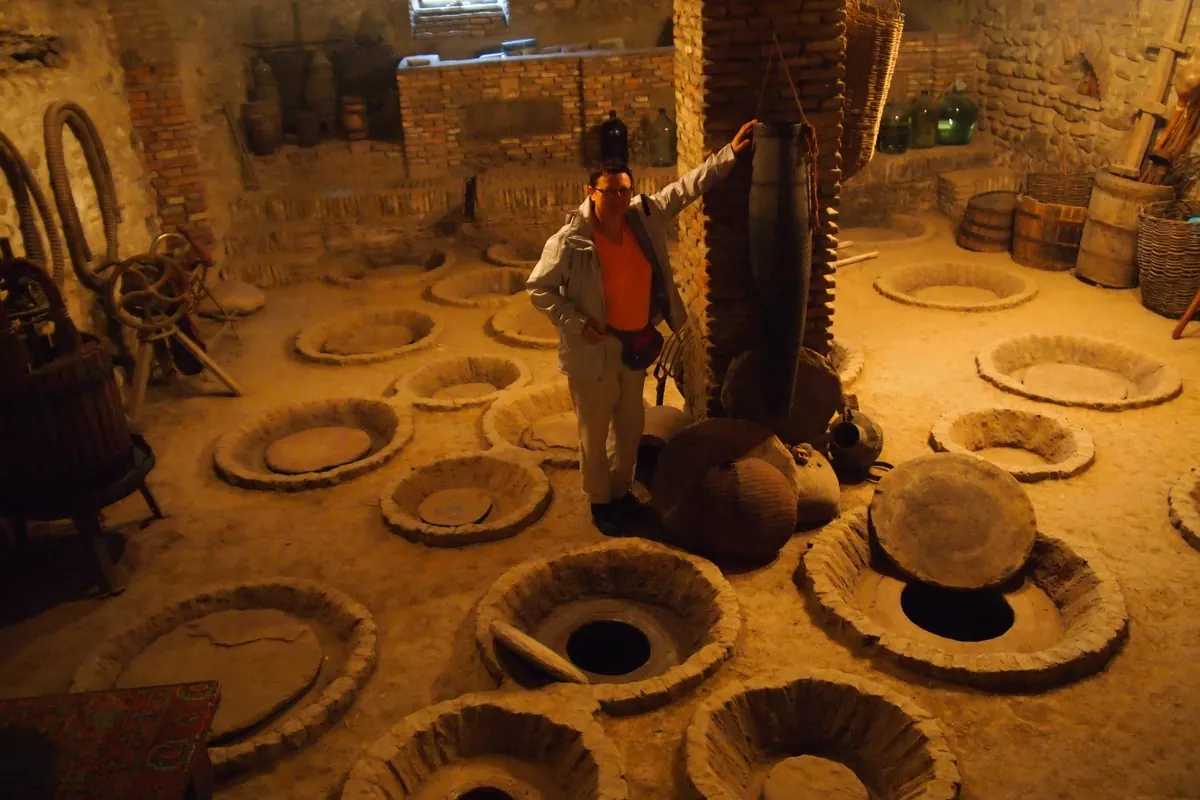
Wine sits at the heart of the table. UNESCO inscribed the ancient Georgian qvevri winemaking method on its Representative List in 2013. Grapes are pressed, and the juice, skins, stalks and pips go into an egg-shaped clay vessel that is sealed and buried, so the wine can ferment for five to six months. UNESCO says wine cellars are still considered the holiest place in the family home, and that wine and vines run through Georgian oral traditions and songs. Georgia's tourism administration dates wine in clay vessels back 8,000 years, and Wikipedia reports grape pips and qvevri from the 6th millennium BC in Kvemo Kartli, in the south of the country.
Food on the table
The table is meant to be generous. Georgia sat on the Silk Road, Wikipedia notes, and travellers influenced its cooking, while its tourism administration says every region has a defining dish. It calls Georgian cooking heaven for vegetarians and vegans, and names fresh eggplant with walnuts as a delicacy of the supra. Field greens made into pkhali, beans and cheeses sit beside meat dishes such as mtsvadi, meat cooked over fire, and khinkali, dumplings filled with meat. Bread has its own place: shoti is a canoe-shaped loaf baked on the wall of a clay oven. Khachapuri, the cheese-filled bread, is regarded as Georgia's national dish. Wikipedia's account of Kakheti cooking also lists chakapuli, a soup of tarragon and lamb, and khashi, boiled meat often eaten after a supra.
Songs and dance around the table
Music has always travelled with the feast. UNESCO describes Georgian polyphonic singing, on its list since 2008, as a tradition that ran through everyday life, and says polyphonic dialogue over a bass background is common in Kakheti, the eastern wine region. Its best-known example, the song Chakrulo, was chosen to accompany the Voyager spacecraft in 1977, Wikipedia notes. It adds that Georgian folk songs often centre on the feast called supra, with toasts and songs to God, peace, the motherland, long life, love and friendship, and that feast songs include the Mravalzhamier songs and Zamtari, sung to remember ancestors. Dance has its own stage tradition, covered in the folk-dance guide on this site.
Read next: Georgian folk dance, explained
What the Tbilisi dinner-and-dance night is
This ticket is a hosted group evening of about four hours. You meet a host and fellow travellers at a central point in Tbilisi, then go to a Georgian restaurant known for its shows and sit at shared tables. The ticket covers a Georgian dinner, homemade wine at half a litre each, lemonade, water, a live folk-dance show by professional dancers, and a chance to join the dance floor later. The host speaks English and Russian. A photographer is available on request, and one option includes transfers from and back to your hotel. Start times and the meeting point follow the option you pick. The organiser describes the restaurant as a top-rated Georgian one loved by locals, and the price is the same for children.
What the evening leaves out
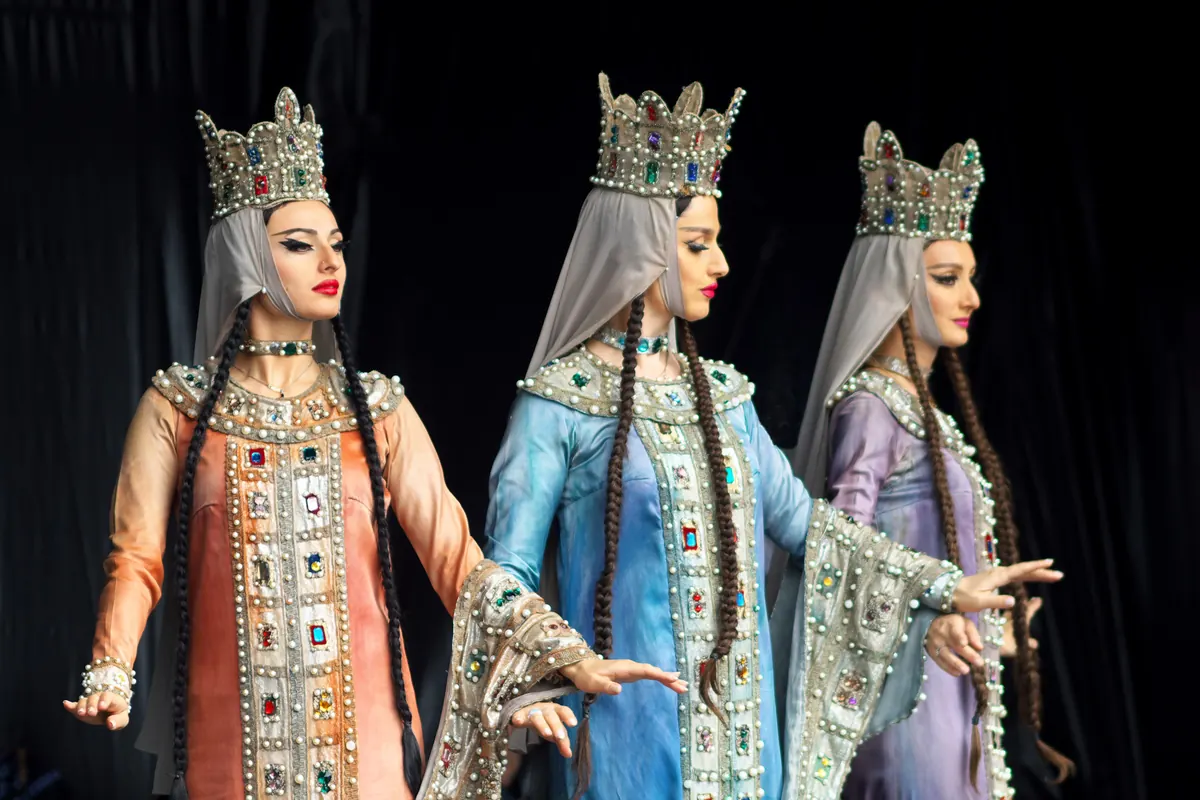
It is not a private family supra and does not pretend to be one. A formal tamada and a structured round of toasts belong to a family or friends' table, and nothing about this ticket promises them, so treat any toasts as a bonus. The dinner is vegetarian, food allergies rule the ticket out, and some travellers say a meat option would help. You eat in a restaurant with other travellers, not in a home. The dancers are professionals; the dance floor, later in the evening, is where visitors join in. The restaurant is the organiser's choice, so the room, the menu and the dances are not yours to pick.
Is it a good way to try a supra?
Yes, if you want the pieces together in one evening: shared Georgian food, local wine, other travellers and a dance show, with a host who can explain what is going on. It suits solo travellers, pairs and small groups, and reviewers describe guests from different countries mixing easily. If what you want is the ritual itself, the long speeches and the family around you, no ticket can sell that. The nearest a visitor usually gets is an invitation, or a visit to a family cellar on a wine-region day trip, where the qvevri tradition lives. The two work well side by side, and the dinner night is the easier one to fit into a short stay.
Who this isn't for
Anyone who wants meat dishes on the table, anyone with food allergies, and guests who would rather have a quiet dinner for two. Shared tables mean talking to strangers for about four hours, and the dancing is part of the evening, not a background to it. If you want a private, candlelit meal, book a restaurant table of your own instead. If you want the full toast ritual, accept that this evening gives you a taste of it, not the whole thing, and look for a family cellar or an invitation for the rest. If you simply want a lively first night in Tbilisi, it is a good place to start.
Frequently asked questions
What is a supra?
A supra is a traditional Georgian feast led by a toastmaster called a tamada. The word means tablecloth. It covers festive meals, called keipi, and the sombre meals held after burials, called kelekhi.
Is the dinner-and-dance night a real supra?
Not in the family sense. It is a hosted group dinner at shared tables in a Tbilisi restaurant, with a folk-dance show. It shares the food, wine and company of a supra, but a formal tamada is not part of the ticket.
How old is the supra?
The table and the wine are old, but the toastmaster ritual as practised now dates mainly from the 19th century, according to the scholars Wikipedia summarises.
What does tamada mean?
A tamada is the toastmaster who introduces each toast at a Georgian feast. Guests choose one, or the host does, and a good tamada speaks well and keeps the table together.
Do I have to drink alcohol?
You can join the dinner-and-dance night without alcohol, because lemonade and water are included beside the wine. In the tradition itself, a guest who prefers not to speak may drink after words that resonate.
Is the dinner vegetarian?
Yes. The dinner on this ticket is vegetarian, and food allergies rule the ticket out. Georgian cooking also has many meat dishes, which a restaurant table of your own can offer.
Sources